
Quick Overview Automobiles are vehicles designed for personal or commercial transport, evolving from early steam-powered machines to modern electric and autonomous cars. They have revolutionised mobility, business, and daily life over the past 250 years. This blog will walk you through:
✅ The earliest self-propelled vehicles, including Nicolas-Joseph Cugnot’s 1769 steam car
✅ Karl Benz’s 1885–1886 invention of the first practical gasoline-powered car
✅ The rise of mass production with Henry Ford’s Model T, making cars affordable
✅ Safety innovations from seatbelts to airbags and anti-lock braking systems
✅ Technological advancements such as GPS, hybrid powertrains, and infotainment systems
✅ The emergence of electric and autonomous vehicles transforming modern driving
✅ How automobiles have evolved over time, from steam engines to AI-driven cars
✅ Key trends shaping the future: sustainability, connected cars, and hydrogen power
The invention of the automobile transformed the way people live, travel, and conduct business. From the earliest steam-powered vehicles to modern electric and autonomous cars, automobiles have undergone incredible advancements. But when was the first car made? The answer depends on how one defines a “car.”
The history of the automobile spans centuries of engineering innovations, with early vehicles running on steam, electricity, and eventually gasoline. Over time, the development of mass production, safety improvements, and environmental considerations led to the cars we see today. This guide explores the origin of cars, the first automobile inventors, and how cars have evolved over time.
The First Car: Who Invented the Automobile?
The first car was not invented by a single person but was the result of numerous technological advancements by different inventors. Depending on the criteria used—whether it’s self-propulsion, an internal combustion engine, or mass production—there are different answers to the question of who built the first car.
Early Steam-Powered Vehicles (1769–1800s)
Long before gasoline-powered engines, inventors experimented with steam-powered vehicles.
✔ In 1769, Nicolas-Joseph Cugnot, a French engineer, built the first self-propelled vehicle. ✔ His invention, a three-wheeled steam-powered carriage, was originally designed for the French military to transport artillery. ✔ The vehicle could travel at 2.5 mph (4 km/h) but had significant drawbacks, such as needing to stop every 15 minutes to reheat the boiler.
Fact: Cugnot’s steam vehicle is often considered the first true automobile, though it was impractical for widespread use due to its slow speed and bulky design.
Other inventors continued experimenting with steam-powered vehicles in the early 19th century, including: ✔ Richard Trevithick (1801) – Built the London Steam Carriage, which transported passengers. ✔ William Murdoch (1784) – Designed an early steam-driven prototype.
Despite these efforts, steam cars never became mainstream, as they were too large, slow, and inefficient for everyday travel.
The First Internal Combustion Car (1885–1886)
✔ In 1885, Karl Benz, a German mechanical engineer, designed and built the first practical gasoline-powered automobile. ✔ His creation, the Benz Patent-Motorwagen, was patented in 1886 and is widely recognized as the first modern car. ✔ It featured:
- A single-cylinder four-stroke engine.
- Three wheels instead of four.
- A maximum speed of 10 mph (16 km/h).
Fact: Bertha Benz, Karl’s wife, made the first long-distance car trip in 1888, traveling 66 miles (106 km) to demonstrate that automobiles could be used for practical travel.
Following Benz’s innovation, other inventors refined and improved the internal combustion engine, leading to the rapid growth of the automobile industry.
Complete Our Online Automotive Technology and Maintenance Course!

The Evolution of Cars: Major Milestones
Once the internal combustion engine was successfully implemented, the automobile industry took off. Several key milestones contributed to the growth of modern cars.
The Rise of Mass Production (1900s–1920s)
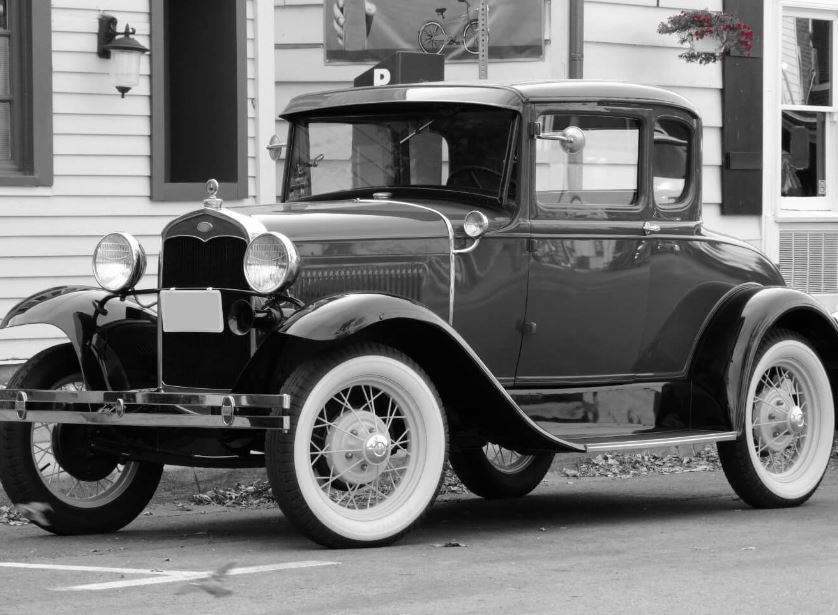
✔ The early 1900s saw the introduction of assembly line manufacturing, making cars more affordable. ✔ In 1908, Henry Ford revolutionized the industry by introducing the Ford Model T, the first car produced on a large scale. ✔ Ford’s moving assembly line allowed for faster production and lower costs.
Fact: The Model T originally cost $850, but by 1925, it was only $290, making cars accessible to the middle class.
Other companies, such as General Motors (GM) and Chrysler, soon followed, creating competition and innovation.
The Introduction of Safety Features (1930s–1960s)
✔ In the 1930s, automakers began focusing on safety improvements, introducing hydraulic brakes and seat belts. ✔ The 1950s and 1960s saw the rise of crash testing, airbag research, and anti-lock braking systems (ABS). ✔ In 1959, Volvo introduced the three-point seatbelt, now a standard safety feature in all cars.
Example: Early cars lacked safety measures, but innovations like padded dashboards, crumple zones, and better seatbelt designs reduced fatal accidents.
The Technological Revolution (1970s–2000s)
✔ Fuel efficiency became a priority due to the 1973 oil crisis. ✔ The 1990s introduced digital technology, with cars featuring GPS, fuel injection, and electronic stability control. ✔ The Toyota Prius (1997) became the first widely available hybrid car, combining gasoline and electric power.
Fact: By the 2000s, many luxury cars featured automatic parking, touchscreen displays, and advanced navigation systems.
The Rise of Electric & Autonomous Vehicles (2010s–Present)
✔ The Tesla Roadster (2008) changed the perception of electric cars, offering long battery life and high performance. ✔ Governments worldwide are pushing for electric vehicles (EVs) to reduce carbon emissions. ✔ The development of autonomous (self-driving) technology has introduced cars capable of navigating roads with minimal human input.
Example: Companies like Tesla, Waymo, and Mercedes-Benz are testing fully autonomous vehicles, aiming to revolutionize the future of driving.
How Cars Have Changed Over Time
| Era | Key Developments | Notable Cars |
| 1769–1886 | Steam and early gasoline engines | Cugnot’s Steam Car, Benz Patent-Motorwagen |
| 1900s–1920s | Mass production and affordability | Ford Model T, Rolls-Royce Silver Ghost |
| 1950s–1970s | Safety innovations and fuel efficiency | Volkswagen Beetle, Chevrolet Impala |
| 1990s–Present | Digital tech, electric & autonomous cars | Toyota Prius, Tesla Model S |
The Future of Automobiles
The future of the automobile industry is driven by sustainability, automation, and AI-powered innovations.
✔ Electric Vehicles (EVs) – Companies are moving toward zero-emission cars to combat climate change. ✔ Autonomous Cars – AI and machine learning are enabling self-driving capabilities. ✔ Connected Cars – Vehicles now include smart technology that integrates with the Internet of Things (IoT). ✔ Hydrogen-Powered Cars – Researchers are exploring hydrogen fuel cells as a clean energy source.
Fact: The UK and EU plan to ban sales of new petrol and diesel cars by 2035, pushing for EV adoption.
Complete Our Online Automotive Technology and Maintenance Course!
Conclusion
The history of cars spans over 250 years, from steam-powered carriages to AI-driven self-driving vehicles. While the first car was built in 1769, Karl Benz’s 1886 Motorwagen is widely considered the first practical automobile. With continuous innovation, the automobile industry has transformed, focusing on efficiency, safety, and sustainability.
Key Takeaways:
✅ The first self-propelled vehicle was created by Nicolas-Joseph Cugnot in 1769. ✅ Karl Benz built the first gasoline-powered car in 1885–1886. ✅ Henry Ford’s Model T (1908) introduced mass production, making cars affordable. ✅ The future of automobiles is focused on electric, autonomous, and connected vehicles.
The next generation of cars is here—are you ready for the future of transportation?
← Previous
Understanding No Motor Vehicles Sign: Prevent Trespassing
Next →
What Is the Main Section of A Motor Vehicle: Explore Motor Vehicle World

About the Author
QJb9zXyCKzOCOye
Professional educator and content writer at StudyMate Central, helping UK professionals advance their careers.